

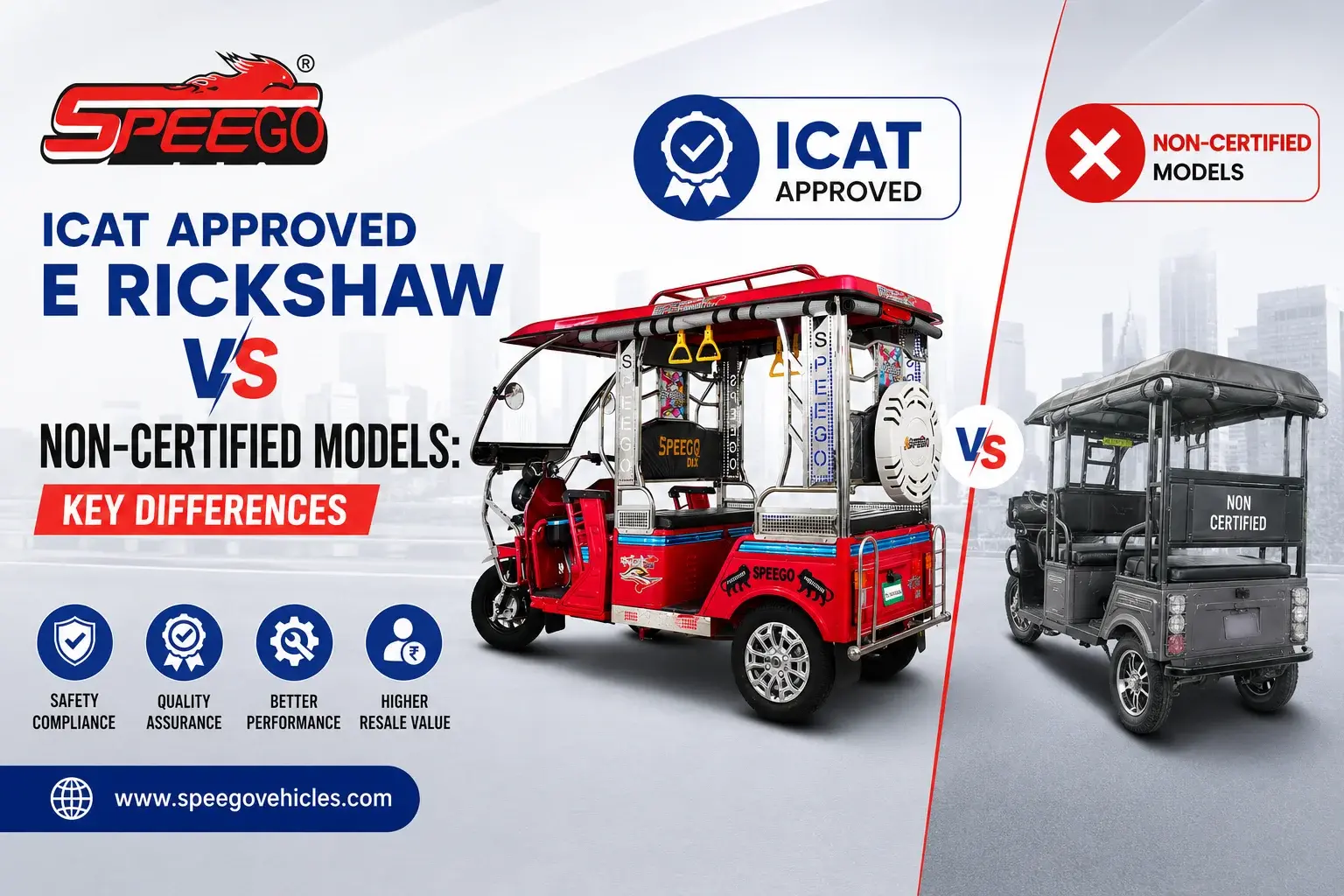
Electric rickshaws are continuously increasing across PAN India due to their high demand in both tier-1 and tier-2 cities. Being the best mode for last-mile connectivity, even riders are switching from auto to e-rickshaws. With both ICAT approved E Rickshaw and non-certified models available in the market, it gets difficult to choose the best.
Not every rider is aware of the importance of ICAT (International Centre for Automotive Technology) certification. That is what leads to buying cheap, low-quality electric rickshaws that require high maintenance. If you do not wish to face the same, you must be aware of the main differences between ICAT-certified and non-certified models.
Difference in regulatory and road safety compliances
ICAT-approved electric rickshaws comply with all Central Motor Vehicles Rules (CMVR). They are manufactured adhering to all Indian safety standards, ensuring that each component, including batteries used in them, is of optimum quality. They are easy to register with RTO and have legal road permits, making them a safe choice for Indian roads. Whereas non-certified models are not authorized by road safety or transport authorities. Also, they are more likely to get heavily fined due to failure to meet quality standards.
Difference in safety and build quality
Safety is a non-negotiable factor in every vehicle, including electric rickshaws. And ICAT approved E Rickshaw undergoes stringent quality tests to ensure that they are safe to run on different Indian roads. They are manufactured using quality-tested components and are carefully evaluated at the end to reduce the risk related to accidents and breakdowns. Right from the chassis strength to braking systems, battery performance to electrical wiring, each of these parts is tested to ensure safe and reliable performance of electric rickshaws.
On the other hand, non-certified E-rickshaws are often manufactured using cheap materials to save money on them. Not only does it increase the risk of breakdown and failure, but they have also increased accident risks. Their low-quality welding and poor components cause frequent breakdowns and repair requirements.
Difference in battery quality and performance
The battery is the main component of every e-rickshaw as its performance is dependent on the same. ICAT approved models use certified battery systems, reliable controllers, and quality charging mechanisms. It helps improve the overall efficiency of vehicles while reducing the risk of electrical failure or overheating. In comparison, non-certified e-rickshaws compromise on battery quality to lower production costs. But this causes frequent charging problems, may damage the battery, and also increases maintenance expenses over time.
Difference in maintenance and repair needs
Certified electric rickshaws offer excellent performance due to their quality components and use of advanced technology. These vehicles are quality tested after final manufacturing, making them require low maintenance and repair. This helps minimize overall maintenance costs, along with making them a durable choice.
However, non-certified rickshaws do not use quality materials, and they face frequent repairing and maintenance requirements, which increases the overall cost. Also, such electric rickshaws are less likely to last longer and may get damaged soon.
Conclusion
By understanding the differences we have shared above, buyers can easily make the right decision when buying E-rickshaws. If you need a quality, compliant with all road safety standards, high-performance, excellent battery life, and low maintenance electric rickshaw, then always go for ICAT approved E Rickshaw over non-certified models. Go for manufacturers like Speego Vehicles Co. Pvt. Ltd., so that you can easily find a well-certified and quality-tested E-rickshaw for Indian roads.